- Founder Weekly
- Posts
- Founder Weekly (Issue 750 September 30 2026)
Founder Weekly (Issue 750 September 30 2026)

Rahul Chaudhary
September 30, 2026
In partnership with

Welcome to issue 750 of Founder Weekly. Let's get straight to the links this week.
The AI Work Handbook That Cuts Your Workday in Half
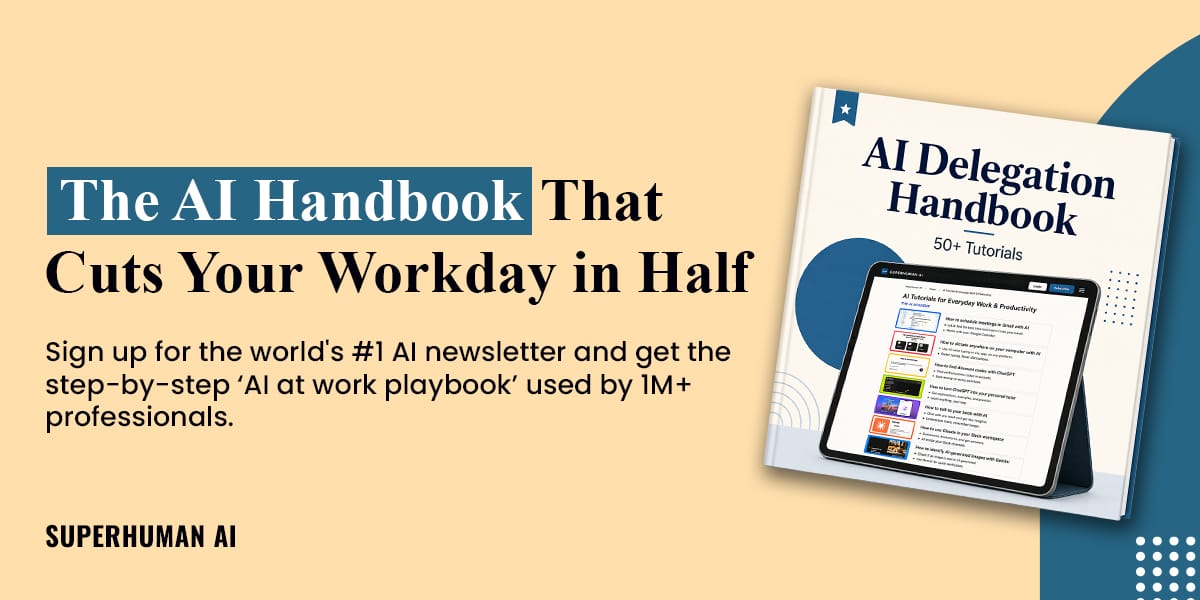
The 8-hour workday is becoming a 4-hour workday for people who know how to use AI.
Everyone else is still catching up.
This AI work playbook shows you exactly how to cut your work hours in half using AI.
Sign up for Superhuman AI and get:
50+ step-by-step AI tutorials to cut your workload in half — covering every part of your workday, from emails to strategy, used by 1M+ professionals at Google, Microsoft, and NASA
Superhuman AI newsletter (4 min daily) so you keep discovering new AI tools and skills to stay ahead in your career — the playbook is just the start
General
Greg Isenberg outlines a practical playbook for “AI roll-ups”: buy small, owner-operated services businesses (e.g., accounting or property management firms) from retiring boomers, then use AI agents to automate much of the work and lift EBITDA margins from ~5-10% to 30-40%. The guide covers why the opportunity is open to solo founders, how to source/score/diligence targets, set up agent workflows and rulebooks, manage the first 100 days, suitable industries, and key risks.
With two small exits under his belt, Erik Allebest bought Chess.com. That was in 2005. He grew it slowly over the next 21 years, always prioritizing quality. Today, it's the largest chess platform in the world, with 300 million registered users and nearly $200M in annual revenue. Here's Erik on how he did it.
Every “AI” tool is missing critical features that you would need if you wanted to do real work with them. What would those look like, if they existed?
Field notes from a millennial raised in pre-AI tech.
Inside Netflix's internal AI rollout, a process that included lots of good old-fashioned thinking, writing and talking.
Marketing, Sales and PR
The author shares 37 practical questions founders can use to uncover customer “pull,” situations where buyers have an urgent problem but lack a good enough solution. He explains how to use these questions in customer discovery and sales conversations while avoiding misleading signals that can make weak demand look stronger than it is.
Tap into customer language to boost conversions, AI visibility, SEO results, and so much more.
Catherine from LinkedIn Sales Solutions shares research on why trust and relevance matter more as AI makes high-volume outreach easier, highlighting four behaviors that distinguish top sellers: signal-based selling, early multithreading, timely engagement, and genuine personalization. She also explains why warm introductions, expertise-led conversations, and a strong public LinkedIn presence can improve response rates, buying signals, and visibility in AI search.
Money and Finance
Learn how dual-class shares let founders control companies they barely own, the limits of supervoting, and why some founders who had the most of it still lost their companies.
A new class of companies, and the capital that doesn’t exist to fund them.
Kyle Harrison examines why the value of a startup’s customers depends on more than logo count, focusing on factors such as contract size, net dollar retention, churn, and gross margins. He also looks at how AI changes the economics, where large customers can generate significant revenue but higher serving costs and experimental budgets can make that revenue less durable.
The article examines how venture due diligence is becoming less visible in frontier technology deals, as fundraising accelerates and investors increasingly rely on lead investors, reputation, and market momentum. It highlights the risks this creates for AI and quantum startups, while noting that the lack of publicly visible diligence does not necessarily mean technical diligence was skipped.
Our Other Newsletters |
Python Weekly - A free weekly newsletter featuring the best hand curated news, articles, tools and libraries, new releases, jobs etc related to Python. |